Understand your liver condition, symptoms, causes and advanced treatment options.
Excess fat build-up in the liver can lead to inflammation and serious complications.
Scarring of the liver tissue due to long-term damage and inflammation.
Liver cancer develops when abnormal liver cells grow uncontrollably and may require carefully planned surgical, interventional, or multidisciplinary treatment.
Cirrhosis is advanced liver scarring caused by long-term liver damage, which can gradually impair liver function and lead to serious complications.
Hepatitis is inflammation of the liver that may result from viral infections, autoimmune conditions, medications, or other causes affecting liver health.
Autoimmune hepatitis is a disease where your immune system attacks your own healthy liver cells, leading to inflammation and potential liver damage.
Liver failure occurs when the liver can no longer perform essential functions, requiring urgent assessment, supportive treatment, and sometimes transplantation.
Gallbladder cancer is a rare and aggressive malignancy that originates in the inner glandular cells of the gallbladder.
Fatty liver occurs when excess fat builds up in the liver, often linked to metabolic health, lifestyle factors (Alcohol), and other underlying conditions.
Bile duct cancer (cholangiocarcinoma) develops in the ducts carrying bile from the liver and may require complex surgery, reconstruction, or cancer-directed treatment.

Not sure which condition applies to you?
Our experts can help you identify the issue and guide you.
Minimally invasive liver surgery for faster recovery and comfort.
Liver transplantation using a healthy liver segment from a donor.
Transplantation using a donated liver from a deceased donor.
Advanced treatments for selected liver tumors without surgery.

Comprehensive assessment to determine suitability for liver transplantation.
Liver Transplant & GI Surgeon | MBBS, MS, DNB (Surgical Gastroenterology)
Cirrhosis is a serious, long-term condition in which continuous injury to the liver leads to permanent scarring. As scar tissue replaces healthy cells, blood flow becomes restricted and the liver gradually loses its ability to filter toxins, produce essential proteins, and support digestion.
Cirrhosis usually develops slowly over many years. In the early phase, a person may feel almost normal. But as damage increases, symptoms become clearer and complications can turn life-threatening.
Healing of the liver after repeated inflammation forces it to heal as fibrosis, which turns into cirrhosis.
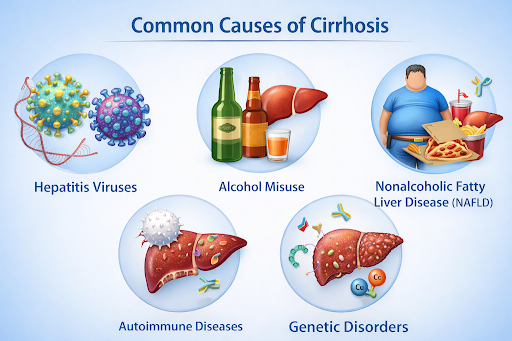
Common causes include:
Early warning signs are subtle:
Because they are nonspecific, diagnosis is often delayed.
As liver function declines, stronger signals appear:
These mean the liver is struggling to maintain balance.
The disease becomes critical when complications repeat, such as:
Specialists then assess the need for advanced intervention, including transplantation.
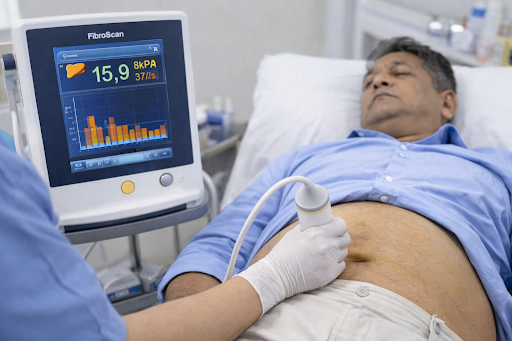
Evaluation usually includes:
Early detection offers the best chance to slow progression.
While scarring is usually permanent, timely care can:
Management aims to stop further damage, treat complications, and prolong survival.
Disease-Specific Medicines:
Depending on the cause, targeted therapy may be used. Antivirals can treat Hepatitis C and help control Hepatitis B. Some autoimmune conditions require steroids or immunosuppressants.
Alcohol De-addiction & Toxin Avoidance:
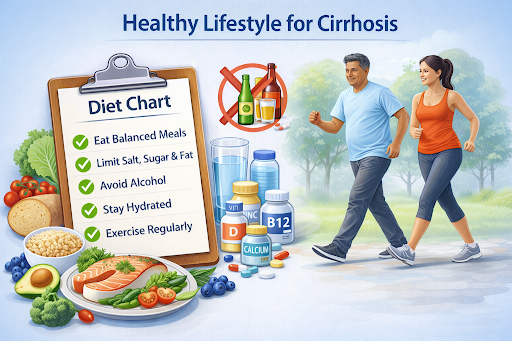
In alcohol-related disease, lifelong abstinence is essential. Rehabilitation support may be needed.
Metabolic Risk Control:
For patients with Nonalcoholic fatty liver disease, improving weight, cholesterol, and blood sugar can significantly slow progression.
Doctors may prescribe treatment to:
Some patients need endoscopic or radiological procedures.
When liver function falls severely or complications become frequent, liver transplantation is the definitive life-saving option. Replacing the diseased organ with a healthy one can restore function and dramatically improve both longevity and daily living.
If you are facing liver cancer or have been advised transplant evaluation, timely expert guidance can change the course of treatment.
Families choose this center for its blend of expertise, technology, and compassionate care.
Understand your liver condition, symptoms, causes and advanced treatment options.
Excess fat build-up in the liver can lead to inflammation and serious complications.
Scarring of the liver tissue due to long-term damage and inflammation.
Liver cancer develops when abnormal liver cells grow uncontrollably and may require carefully planned surgical, interventional, or multidisciplinary treatment.
Cirrhosis is advanced liver scarring caused by long-term liver damage, which can gradually impair liver function and lead to serious complications.
Hepatitis is inflammation of the liver that may result from viral infections, autoimmune conditions, medications, or other causes affecting liver health.
Autoimmune hepatitis is a disease where your immune system attacks your own healthy liver cells, leading to inflammation and potential liver damage.
Liver failure occurs when the liver can no longer perform essential functions, requiring urgent assessment, supportive treatment, and sometimes transplantation.
Gallbladder cancer is a rare and aggressive malignancy that originates in the inner glandular cells of the gallbladder.
Fatty liver occurs when excess fat builds up in the liver, often linked to metabolic health, lifestyle factors (Alcohol), and other underlying conditions.
Bile duct cancer (cholangiocarcinoma) develops in the ducts carrying bile from the liver and may require complex surgery, reconstruction, or cancer-directed treatment.
Not sure which condition applies to you?
Our experts can help you identify the issue and guide you.